
INNOVATION

Defense tech, AI, and fundraising take center stage at StrictlyVC Los Angeles
With just two weeks to go, StrictlyVC Los Angeles is quickly approaching. On Thursday, June 18, at The Aerospace Corporation Campus in El Segundo, investors, founders, and tech leaders will gather for an evening of conversation exploring some of the most consequential shifts taking place across venture capital, defense technology, artificial intelligence, and advanced industry. Secure your spot here.
For executives navigating a rapidly changing technology landscape, StrictlyVC offers something increasingly difficult to find: direct access to the people building, funding, and shaping the next generation of companies.
techcrunch.com
Antares Nuclear Wins the Race to Criticality
When the Department of Energy launched the Reactor Pilot Program last June, it set a July 4, 2026, target for startups to switch on their microreactors and hit criticality—when a nuclear fission chain reaction becomes self-sustaining.
tectonicdefense.com
INVESTMENT

Wealth Managers Circle Defense Tech
As companies fronting the “new space economy” prepare to go public and fortunes grow, local money managers want to bring the resulting riches under their guidance.
labusinessjournal.com
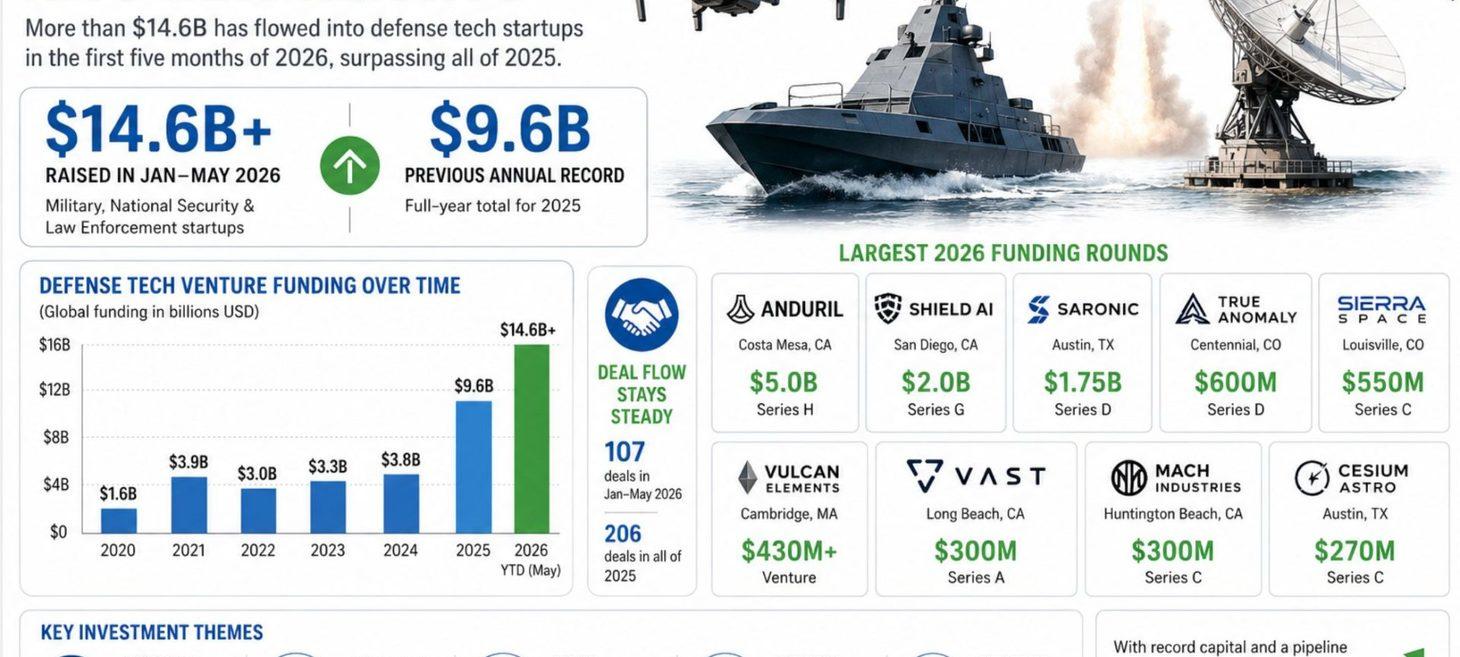
Defense Tech Venture Funding Smashes Records as Investors Pour Billions Into Military Innovation
Defense technology has become one of venture capital’s fastest-growing investment categories, fueled by advances in artificial intelligence, autonomous systems, software, and space-based technologies. According to Crunchbase data, investors have already committed more than $14.6 billion to companies in military, national security and law enforcement categories during the first five months of 2026. The figure has already surpassed the sector’s previous annual funding record of $9.6 billion set during all of 2025.
The surge reflects growing investor confidence that next-generation defense contractors can generate venture-scale returns while addressing increasing global security challenges.
citybiz.co
AI

Ofcom examines whether telecoms security rules are slowing adoption of AI cyber defences
Regulator seeks input from operators as it weighs whether existing requirements are creating unintended barriers to AI-powered security tools
resiliencemedia.co

The Pentagon's AI Edge Is Being Distilled Away
Adversaries do not need to breach the Pentagon’s systems: They only need to harvest the logic of the publicly released frontier AI models that underpin them. This is a defining risk as the Department of Defense pivots to an “AI-first” warfighting machine. In this new context, military predominance is a derivative of AI model supremacy.
From Project Maven’s intelligence fusion to the high-velocity sensor-to-shooter loops of Anduril’s Lattice, the Defense Department’s most advanced systems are tethered to the frontier models forged by tech heavyweights like Anthropic, Google, and OpenAI. As long as these firms hold the high ground in the global race among frontier AI models, the Pentagon will enjoy a strategic advantage.
warontherocks.com
TECHNOLOGY
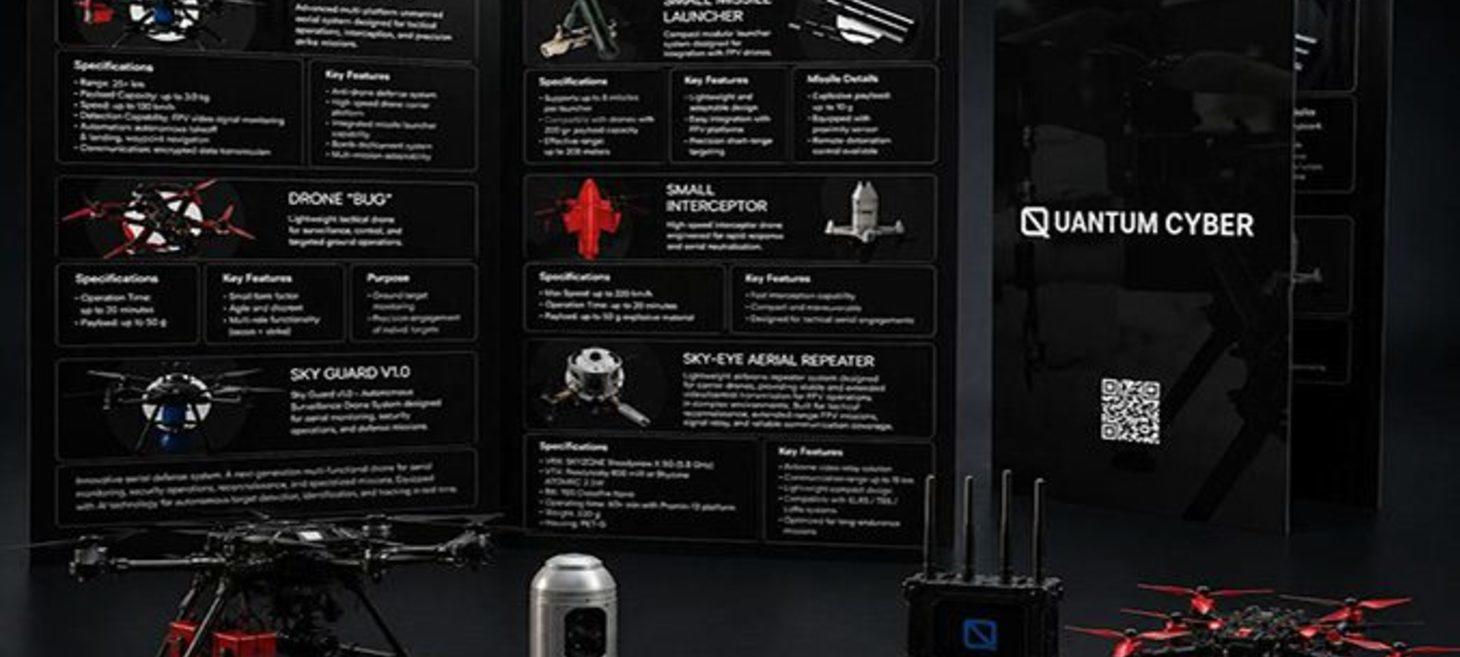
Quantum Cyber Plans U.S. Defense Manufacturing Hub to Strengthen Drone, AI, and National Security Technologies
The initiative reflects Quantum Cyber’s planned transition from a technology development and licensing company to a vertically integrated defense platform with the goal of manufacturing and delivering combat-ready autonomous systems at scale.
The planned facility is designed to support the Company’s growing technology portfolio, which spans FPV drones, interceptor systems, counter-UAS platforms, autonomous ground vehicles, tethered surveillance systems, and naval mine countermeasure technologies.
uasweekly.com
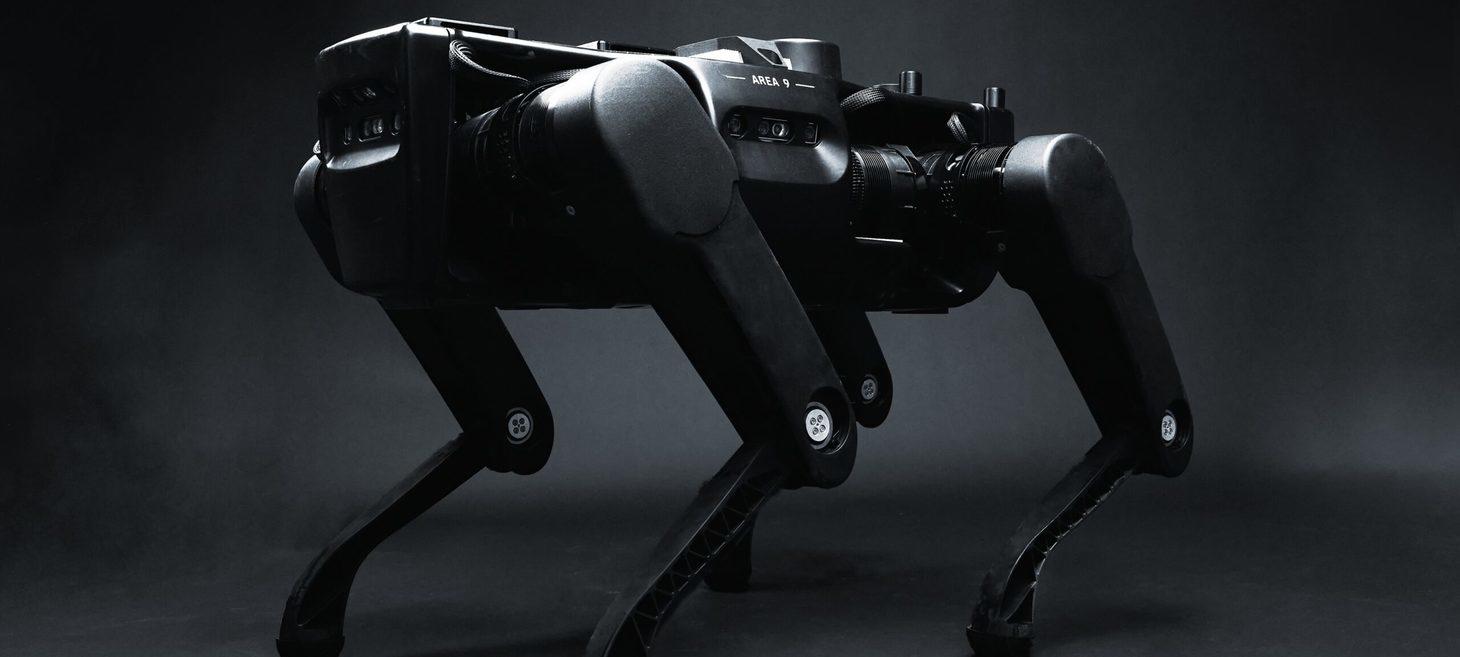
Helsing Officially Launches Area 9, Pushes into Robotics
Well, the dudes (and dudettes) in Germany are diving headfirst into the research game.
tectonicdefense.com

Air Force Eyes Faster Software Updates for More Aircraft
The Air Force has embraced new technical approaches like open mission systems and rapid software updates for cutting-edge aircraft like the B-21 and Collaborative Combat Aircraft. Increasingly, though, the service is also working to apply these to its older, “legacy” aircraft, officials said this week.
“That is where we’re headed on just about every platform going forward,” Vice Chief of Staff Gen. John Lamontagne said June 4 at AFA’s Mitchell Institute for Aerospace Studies. “ … We’re very much looking to prioritize those open mission systems that are government owned that we can upgrade at the time and place of our choosing.”
airandspaceforces.com
Fiber-optic drones show profound limits of 'cutting-edge' weapons
The war in Ukraine casts serious doubt on the wisdom of relying on unmanned military equipment
responsiblestatecraft.org

Taiwan’s drone dream, deferred by Chinese nationalists
Taiwan is deeply divided when it comes to facing up to China. It has turned the island’s defence strategy into a tug-of-war
resiliencemedia.co
SPACE

US Commercial Space Stations Expand to Europe
The ISS may be winding down, but Europe’s access to LEO isn’t going anywhere.
Two commercial space station companies—Vast and Axiom Space—announced this week they would establish new offices in France and Switzerland, respectively, with the aim of forming closer ties with future European customers.
payloadspace.com

Blue Origin rocket explosion shows ‘fragility’ of national-security launch plans
Space Force efforts to breed more competitors aren’t keeping up with ever-increasing demand for rockets.
defenseone.com
HASC NDAA markup challenges Space Force on satellite programs
House Armed Services Committee seeks to preserve a missile-warning satellite program the Pentagon wants to cancel. It also criticizes a recent tactical communications satellite procurement and GPS oversight
spacenews.com