
INNOVATION
Pentagon Chooses Sites for Directed Energy C-UAS Pilot Program
Late last week, the Pentagon’s Army-led counter-drone Joint Interagency Task Force 401 (JIATF-401) announced five military bases selected for a directed-energy counter-UAS pilot program, focused on deploying directed-energy tech, including “high-energy lasers” and “high-powered microwave systems,” to defend the airspace from the ever-present drone threat.
tectonicdefense.com
The laser weapons race enters its industrial era
Countries around the world are rapidly deploying laser weapons for air defense and counter-drone operations. The real challenge now is producing enough systems to withstand modern saturation attacks.
fastcompany.com

Palantir CEO Alex Karp on Ukraine, AI Warfare, and the Company’s Biggest Test Yet
Palantir is often considered controversial for bringing private AI close to war and state power. In Ukraine, it has found its clearest argument: software that can help a democracy survive a larger invading army.
united24media.com
INVESTMENT

US investors warm to Ukrainian defense startups—but export laws slow cooperation
One firm says month-long wait for approval puts it at a competitive disadvantage.
defenseone.com
AI
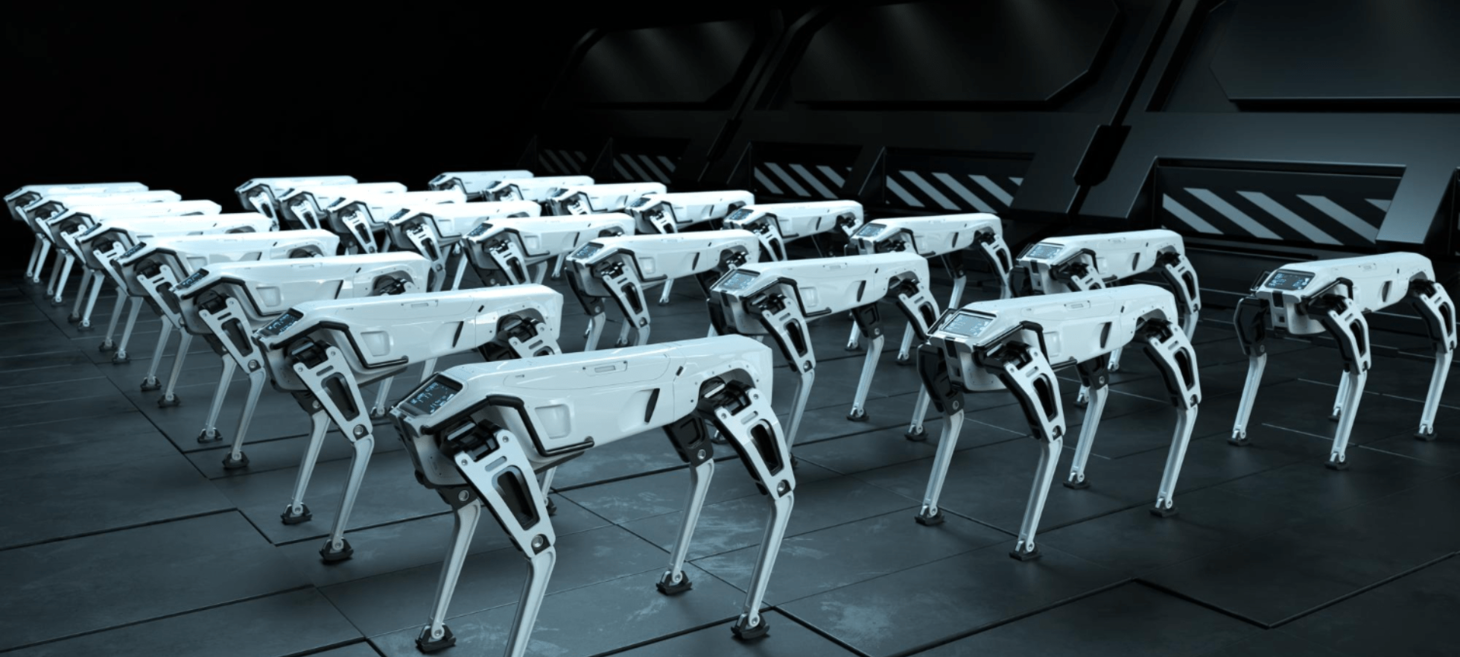
China showcases robotic military dogs alongside anti-mine underwater UAVs
The new system described as an autonomous underwater “scout” capable of conducting reconnaissance, long-range patrols and mine-clearing missions.
interestingengineering.com
TECHNOLOGY

One of DOGE’s Young Engineers Is Now Running a Defense Tech Startup
In an email viewed by WIRED, Ethan Shaotran describes Blitz Industries as “a defense company backed by big names.”
wired.com

Cheap Missiles, Not Drones, Will Win the Next Air War
After four years of watching the war in Ukraine, NATO defense decision-makers are finally beginning to pour money into drones. The Iran conflict has drawn further attention to these investments. The assumption is that unmanned aerial systems will ensure a long-term advantage in conflicts requiring ground operations and infrastructure defense.
warontherocks.com
Lyntris Unveiled as Unified Defense Technology Company to Help DoW and Allied Nation Customers Turn Sense to Certainty
Accelint and Vitesse Systems today unified under the Lyntris name, formalizing a long-term strategy to deliver sense-to-act connectivity across the connected battlespace. The two companies have operated under common ownership, with sensor hardware, sensor architecture and data & software developed in coordination. Today's announcement is the public introduction of Lyntris as a single brand with a common mission.
The company addresses a central challenge in modern warfare: sensing threats earlier, making sense of complex data faster, and enabling action with greater speed and precision across contested, multi-domain environments. Lyntris brings together complementary capabilities across sensor hardware, sensor architecture, and data & software, including AI-enabled data fusion and mission software. These capabilities are engineered to perform in demanding conditions and integrate into existing ecosystems through a modular, open architecture.
Defense Tech Newsletter
EUROPE
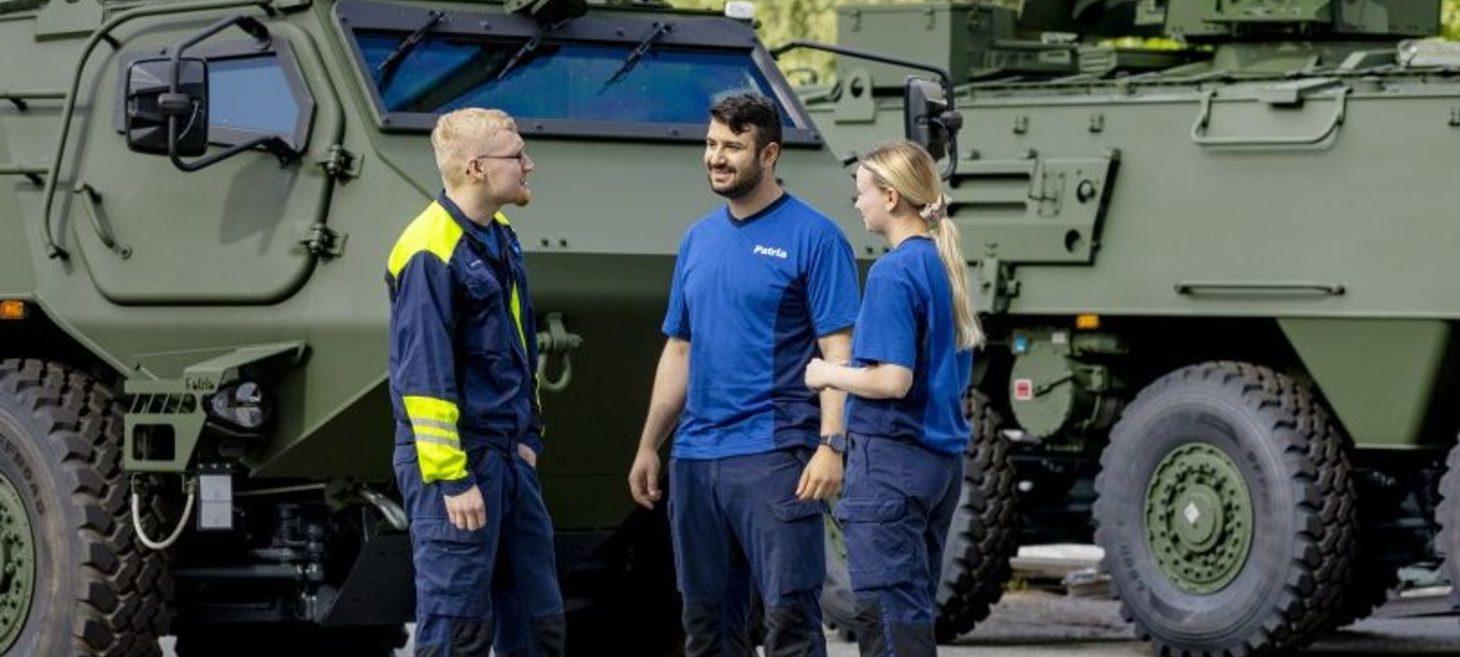
Patria Expands Defense Partnership With Finnish City of Hämeenlinna
Patria and the Finnish city of Hämeenlinna are preparing to formalize a cooperation agreement aimed at strengthening the local defense industrial base.
The proposed letter of intent covers industrial infrastructure, workforce development, and potential joint projects. Planned measures include a demonstration space for local defense companies and the development of new industrial environments.
thedefensepost.com

German defense tech startup Helsing in talks over $1.2B funding round
German defense technology firm Helsing GmbH is reportedly on the verge of securing a bumper $1.2 billion in funding that would bring its valuation to around $18 billion, making it one of Europe’s most valuable technology startups.
siliconangle.com
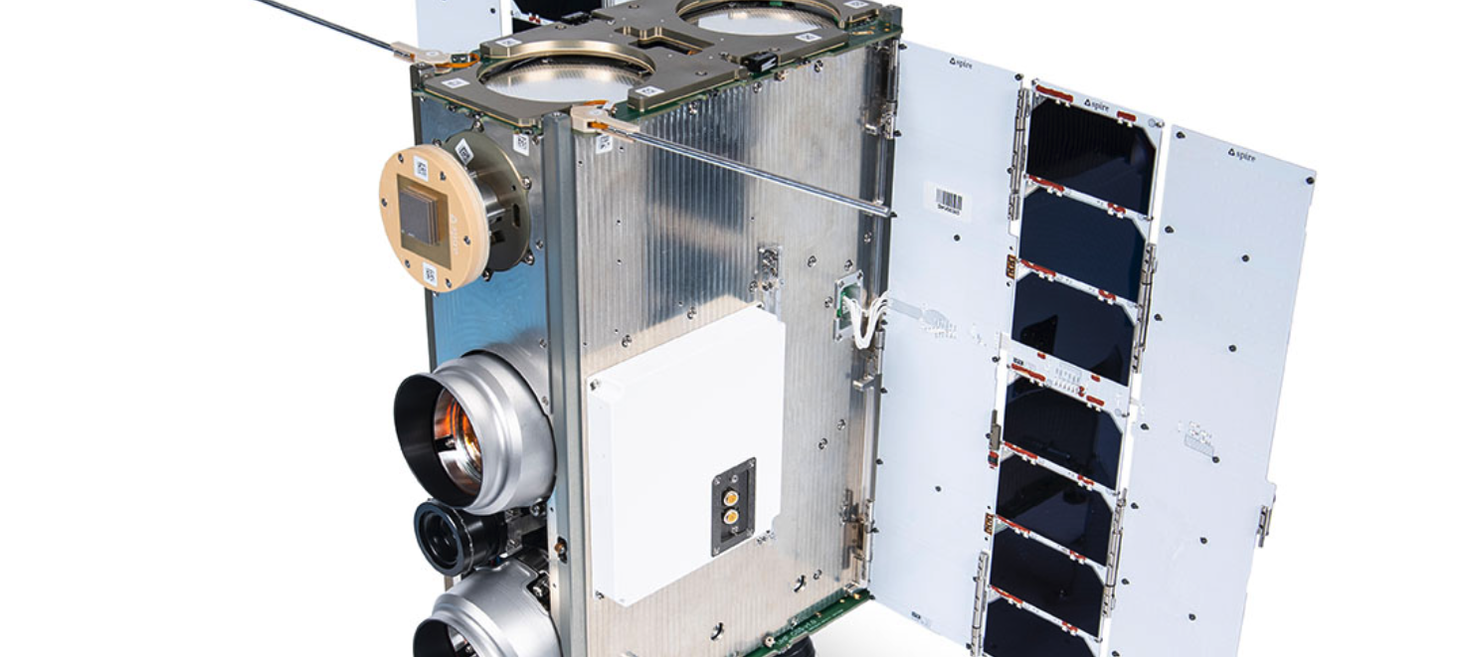
Munich facility gives Spire a base for sovereign space capabilities
Spire operates a constellation of satellites focused on radio frequency sensing, weather monitoring, maritime tracking, aircraft monitoring, and spoofing and jamming detection. The company has increasingly positioned its RF sensing infrastructure as a tool for both monitoring and national security applications.
resiliencemedia.co

Germany and Ukraine Launch “Brave Germany” Defense Alliance for AI, Drones, and Long-Range Weapons
German Defense Minister Boris Pistorius and Ukrainian Defense Minister Mykhailo Fedorov have signed a letter of intent to launch Brave Germany, a joint Ukrainian-German initiative aimed at advancing defense technologies and supporting innovative military startups.
The announcement was made by Mykhailo Fedorov via Telegram on May 11.
united24media.com

Closing the Gap? Italy Sets New Rules for Its First National Security Strategy Amidst Old Obstacles
Italy may finally be about to publish its first-ever national security strategy, a striking development for the only G7 country that has never had one.
For decades, a mix of government instability, competition between institutions, a relatively permissive international environment, and the perceived reliability of U.S. security guarantees in Europe and the Mediterranean reduced incentives to produce a strategy.
warontherocks.com

Belgium seeks deeper defense, aerospace ties with S. Korea
Belgium is seeking to deepen defense and aerospace cooperation with South Korea as Korean defense exports rapidly expand across Europe and NATO markets amid growing geopolitical uncertainty and Europe’s rearmament drive.
At a defense and aerospace forum held in Seoul on Tuesday, the Belgian Embassy in Seoul highlighted South Korea’s emergence as a key global hub for advanced defense manufacturing and technology.
koreaherald.com